Monday, December 23, 2013

This Week: Maui

The totally untrue story of Marilyn Monroe’s Maui House

My husband and I were riding in van, returning from a downhill bike tour of Haleakala Volcano. The tour company, Mountain Riders, picked up seven of us tourists from hotels in Ka’anapali in Western Maui at 2:30 AM and drove us to the 10,000+ foot summit of Haleakala volcano to watch the sunrise. That was 10 hours ago. After the sunrise, we coasted down the mountain on bicycles to the town of Pa’ia some 23 miles away where we had lunch. However, this activity is not the focus of this blog. That’s because I was more intrigued by a story our van driver Duane recounted on the return drive. The van had just dropped off the bike trailer at the Mountain Riders office in Kahului and was now returning us to our hotels, about a 35 minute drive. As we headed out of town on Highway 30, we passed a building so large it could easily be seen from the side of the mountain to the highway a few miles away.

“You see that house up on the hill?” asked Duane as he pointed in its direction. “That was supposed to be Marilyn Monroe’s house.” Even the three women chatting in the back of the van perked up at that statement. With the hook baited, Duane continued his story and it went something like this:

Marilyn Monroe had a house built on Maui with plans to retire in it, wanting to become a recluse like Brigitte Bardot. However, she died before she could move in. According to Duane the house was built, furnished and paid for by Monroe, but she never got to enjoy it. Then the house languished for many decades, but in the 1990s was purchased by a Japanese business man who then expanded the house into a clubhouse and built a private golf course around it.

As I sat in the van listening to this story, I thought how sad. I only knew the bare minimum about Marilyn Monroe, sex symbol, film star, multiple marriages, and tragic death by drug overdose. Monroe seemed to have a lot of demons and to hear she wanted to get away to a beautiful island paradise and retire would have been a happier end to her life. Brigitte Bardot is still alive today, age 79, and is a renowned animal welfare activist. What would Monroe be doing today?

This story so intrigued me that every time we drove by the house on Waikapu as we traveled around Maui, I would take photos. Mostly I wondered how different history and Maui would be if Monroe had succeeded in retiring to Maui. How would Maui with change with Monroe in residence and how would Monroe change after living on Maui?

A few weeks after returning home, I wanted to learn more about Monroe’s Maui house. I logged onto my computer and began a Bing search for “Marilyn Monroe Maui house” just to see what would come up. Sure enough, a few titles popped up, including a website for the golf course, called King Kamehameha Golf Club. I was on the right track. Frank Lloyd Wright’s name also appeared in some of the links, something Duane didn’t mention, along with photos of the building. I clicked on an architecture blog called “The Well Designed Life” by Ginger Brewton and learned that everything that Duane had told us in the van was completely wrong. Well, almost completely wrong. He was correct that a Japanese business man owns the property today, but that’s about it. So here, as paraphrased from the King Kamehameha Golf Course website and several other places, is the true story of the house on the hill in Maui.

In 1949 a wealthy Texas couple commissioned Frank Lloyd Wright to design a house. His plans were quite extensive and called for 8,000 square feet, but for some reason, the couple never had it built. Wright filed the plans away. Then in 1952 the Mexican consulate to the US and his wife commissioned Wright to build them a home in Acapulco Bay. After a visit to the site, Wright pulled his Texas design and added to it increasing the building’s size to 10,000 sq. ft. However, the consulate’s son died suddenly and the building was scrapped. Wright put the plans away. Then in 1957 Marilyn Monroe and her third husband Arthur Miller called on Wright to design a cozy hideaway for the couple in a beautifully natural hillside setting. That setting…Roxbury, Connecticut, about as far from Maui as one could possibly get. The couple also had a few requests for the new home, a movie theater, a swimming pool and a nursery. Wright showed Monroe the plans he already had and she agreed to use them. The size of the house then grew to a whopping 14,000 sq. ft. In 1958 Monroe and Miller divorced and canceled the construction and Wright passed away about a year later. His plans were put away at his design firm, Taliesin West in Scottsdale, Arizona. The home was NEVER built, on Maui or anywhere else.

Jump ahead to 1988 when Hawaiian business investor Howard Hamamoto and his partners were touring Taliesin West in hopes of finding plans for a golf course clubhouse. There were few clubhouse plans in the Wright archives, but he was shown the plans for the “Marilyn House” and between the plans and Monroe’s attachment to them, he was hooked. The plans were expanded to 74,000 sq. ft, however, most of the new space was put below ground, while Wright’s original plans were used for what people see above ground. It opened in 1993. The group sold the course a few short years later.     
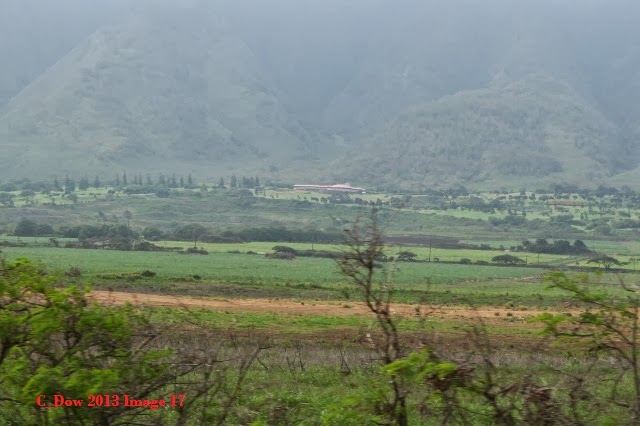
                                                                             

This private members-only golf course was used mostly by rich Japanese men and when the Japanese economy tanked in 1999, the course was closed down and abandoned. Then Tokyo investor and part-time Maui resident Makoto Kaneko bought the property in 2004 for only $12.5 million. He and his investors poured another $40 million in renovations including design elements that emphasized Maui’s history and reopened the course in 2006.They also made an effort to include Maui’s residents to be a part of the course with a museum and other events as well as a men’s and women’s day spa that anyone can use. Today the clubhouse is an excellent example of Frank Lloyd Wright’s work. Many Wright devotees come to tour the building and a portrait of Wright hangs in the clubhouse, The property, which hosts many weddings,  is also known for stunning views Haleakala volcano to the east and both Ma’alaea Bay to the south and Kahului Bay to north as it sits on the isthmus between Maui’s ancient volcanoes.

So this interesting, yet minor story in the lives of both Marilyn Monroe and Frank Lloyd Wright have been brought to my attention because of an incorrect tale told by a bike tour guide. What should I make of Duane? It’s an interesting question because he also told us a house high on a hilltop near Lahaina belonged to Tom Cruise. I attempted to look that up online as well. I found out Mr. Cruise is an investor in a resort property on the neighboring island of Lanai, but could not find anything about a house in Maui. However, I don’t think Duane was intentionally lying. I sure he believed what he was saying. Or maybe he was telling us what we wanted to hear.


Tuesday, October 29, 2013

This Week: The US (economy)

Drink Beer; Save the Economy

After covering the Colorado drinking for scene for three years now, 3 years as a blogger for Drinking Made Easy and 1 year for DrinkDenver, I have seen the brightest star in the US economy and that star is beer. Whether a casual drinker or total beer snob the size of the beer industry in the US has seen unprecedented growth over the last decade and completely exploded the last few years.  All this growth culminated in October at the Great American Beer Festival in Denver, the world’s largest gathering of brewers and beer judging competition. Try and wrap your head around these numbers:
There are currently 2,538 breweries (including brew pubs) operating in the US with 409 breweries opening in 2012. Craft brewers (defined as small independent breweries making 6 million barrels annually or less) sold an estimated 13,235,917 barrels of beer in 2012 and the industry’s retail dollar value for 2012 is $10.2 Billion, note the “b.” If you include large production breweries (such as MillerCoors), that number increases to $99 Billion. The Coors Brewery in Golden, the world’s largest single-site brewery, employs 1,300 people alone. In the Denver-Boulder metro area, just one small part of the country, some 12 breweries/brew pubs opened or are in the process of opening in 2013. Breweries like these employ 108,440 people across the country, including servers in brew pubs. (Facts and figures provided by the Brewers Association and Coors Brewery).
The numbers are nice, but let’s expand on this topic by considering all the businesses that brewing supports.
Agriculture – Hops are one of the fastest growing (pun intended) production crops in the country and US hops are quickly becoming some of the most sought after in the brewing industry. Washington, Oregon and Idaho lead the country in hop production, but other regions are not far behind. Don't forget barley and wheat crops either. With the creativity of the beer industry, other agricultural products, like honey, peaches, apples, cinnamon, even chillis, are finding their way into beer. Did you know the Wynkoop Brewery in Denver makes a beer with bull testicles? But I digress. Following in the footsteps of chefs, there is also farm-to-keg movement with brewers seeking out the freshest and most local of ingredients to use in their beers.
Manufacturing – In order for you to buy a six-pack of your favorite craft beer, someone had to put that beer in a bottle or can. That means an increase in production of machines that bottle, can, seal, label and pack beer. Of course brewing beer takes a lot of equipment too; fermentation tanks, chillers, pipes, kettles and kegs. As breweries continue to open and expand, they will need more equipment.  New Belgium, Sierra Nevada and Oskar Blues breweries will all begin construction on facilities in Ashville, NC, next year and Green Flash Brewing in San Diego will begin construction on a facility in Virginia Beach in 2015. Sierra Nevada is the country’s second largest craft brewery while New Belgium is the third.
Hospitality – As briefly mentioned in the statistics, brew pubs are included in the craft beer industry. A brew pub is a place that serves food and has an on-site brewery that produces beer consumed by customers of the pub. And other, non-brewing restaurants are getting in on the popularity by holding beer pairing dinners and tap takeovers. People who cater and hold special events are inviting craft beer into these events and events planners are having special beers created just for those special occasions such as weddings and anniversaries.
Tourism – Fanatics will seek out the places where their favorite beers are brewed. Think Guinness in Ireland or Hofbrauhaus in Munich. Beer cities in the US are gaining a following as well. Places like Ashville, NC, Boulder, CO, San Diego, CA and Portland OR, are growing hot spots for beer connoisseurs from around the world. Resorts are adding brew pubs to their properties. Examples include the McMenamins chain of hotels with brewpubs, or brewpubs with hotels depending on your point of view, and the new “destination brewery” being built in Littleton, CO by Breckenridge Brewery that will include a BBQ restaurant, retail outlet, hop farm, special event center and visitor center. Airports are serving more and more craft beers and several airports even have brew pubs on site. Sporting arenas are adding craft beers to their menus and one, Coors Field in Denver, has a brewery inside the ballpark, The Sandlot.
You may wonder, with all the other pressing issues the country faces, why discuss this? Because I think the industry is bigger than most people outside of it realize. A press release I received the other day just proves my point. Denver Beer Company, started in August 2011, just purchased a 48,000 sq. ft. warehouse to open as a production facility. The company will begin bottling and canning their beers in Spring 2014. The company purchased canning equipment from Wild Goose Canning in Boulder and barrels and fermenting equipment from DME in Prince Edward Island, Canada.  The company has hired Unleaded Group in Denver to create labels for the new bottles and cans. Denver Beer Co. will be hiring people to work all that equipment soon. All those jobs in just in three years. There’s a saying in the brew business, Drink Locally, Think Globally. So instead of feeling guilty about spending your hard earned cash on some craft beer, instead savor that beer. Breweries are located where their customers are, in the community, in your neighborhood. And the people who brew beer are passionate, smart, well-educated folks. Because they brew for their neighbors, they strive to make the highest quality beers possible.
The next time someone asks you to join them for a beer, do it. You’re supporting a local industry that supports many other industries around the country. Do it for you; do it for your country.  
***

This blog was rejected by Jean Chatsky, Money Guru for the Today Show, former editor of Money Magazine and author of several self-help financial books. Jean made a request for guest bloggers on Twitter and I answered thinking I could write about saving money while traveling.  Her assistant Arielle said they had enough travel advice and since I wrote for DrinkDenver, maybe I could offer a blog on “ways to save money during happy hour.” Really? Last time I checked happy hour pretty much EVERYWHERE meant half price or 2-for-1 drinks and cheap finger foods. Anyway, I offered up this idea, that if more Americans drank beer, we could save the economy. Arielle said no because it wasn’t “personal enough.” However, I thought my idea was fun and light (and true!), and we can all use some humor in this heavy, serious economy. I’ll let you be the judge.

Friday, September 6, 2013

This week: Go World Travel

I have written a total of 3 pieces that the folks at Go World Travel website have been kind enough to publish. I enjoy writing for them because they prefer offbeat locations and personal narratives. My pieces focus exclusively on the Virgin Islands, but hopefully I'll have some others for them in the future. If you would be so kind, please take some time to read one or all three. Show some support for this unique travel magazine and writers like me!

Go World Travel

or cut and paste:

http://www.goworldtravel.com/tag/carrie-dow/

Friday, August 30, 2013

This Week: Jost van Dyke, British Virgin Islands

That Time of Day

Kenny Chesney and I share a common bond. Not every day I have the same experience as that of a country music superstar. What could we possible have in common? We both know the joys of happy hour. However, I should state that it’s not just any happy hour. We know deeply the sublime and transcendent experience that is happy hour at the Soggy Dollar Bar in White Bay, Jost van Dyke. An experience so memorable Chesney wrote a song about it for his latest album, Life on a Rock. I hope he doesn’t mind if I borrow the song title for this month’s blog.
First some background. Jost van Dyke, a British Virgin Island, is only four square miles of rock and scrub in the Caribbean Sea. It sits next to two much larger islands, Tortola, its British sister and St. John, its American cousin. The remnants of an ancient volcano, Jost resembles an emerald boulder dropped in the ocean. Nothing financially productive can grow on it and it’s too small for any industry, which makes it ideal for leisure. Jost is a great place to vacation precisely because you can’t do much there.
The Soggy Dollar Bar is an icon in its own right. Part of the Sand Castle Resort, it was built in 1970 by George and Mary Myrick. It quickly became the favorite watering hole of local fisherman and millionaire yachties alike. In the mid-1970s George created the Painkiller, an intoxicating mix of rum, pineapple and orange juice and crushed nutmeg on top. Over the decades word of this concoction spread from sailor to shore to mainland to continent and now people from all over the world come to White Bay for a Soggy Dollar Painkiller.
After several visits to this Caribbean hideaway Kenny and I have noticed there is a certain melancholy at this place that considers itself as the happiest on earth. Kenny put his feelings very succinctly in a song. I, however, will blather about it in this blog.
I should explain a few things in more detail. The Soggy Dollar’s happy hour is from noon until 3 PM, unlike in the states where happy hour normally ends the work day, usually from 4 to 6 or 7 PM. The reason for this early event is because a majority of visitors to White Bay are tourist from the US side and before they return, these boats have to pass through customs and those offices close between 4:30 and 5 PM daily. So around 3 PM is when these boats leave the bay for the trip back. It’s also when the sun starts to dip down in the sky. I found out when happy ends the hard way. Starting at noon I purchased two painkillers for $8, $4 each. Shortly after 3 PM I went to purchase two more (my husband and I had already had three). The bill? $16, double that of happy hour.
But oh the joys experienced in those three short hours! An entire life is packed into them because the people you meet will become lifelong friends you will never see again. You trade stories about your kids and pets, share smartphone photos and get awkward hugs from men you don’t know while your husband gets cheek kisses by co-eds. You laugh, you cry, you sing songs and dance and yes, you get drunk. You beg your boat captain to stay for just one more drink or you beg your new friends’ boat captain to stay. When you’re on a boat, the vision of Jost getting smaller behind you is depressing. When you’re on the shore, it can feel down right lonely watching the boats leave one by one.  If fact, a lot of things on Jost shut down after the tourist boats leave, which makes staying on the island even more lonely. The two places to stay in White Bay, The Sand Castle and Ivan’s Stress-free Campgrounds, don’t have TV’s or phones or wi-fi. When the sun goes down, you are in the dark. The Soggy Dollar’s kitchen closes at 8 PM. We didn’t know that when we stayed on the island. However, in true island manner, when we arrived hungry at 8 PM the bartender and chef offered us a series of appetizers; all that they had left that evening. We were grateful for that.
As Kenny sings, though, you never really say goodbye to Jost. Instead you say, ‘until we meet again.’ That is the real beauty of happy hour at White Bay.
It’s That Time of Day by Kenny Chesney
It’s that time of day
That we all knew would come
To pay for all the rum
And pull up anchor cuz we’re done
It’s that time of day
I see a cotton candy sky
So many colors in my eyes
Proof again God’s alive
This ain’t a goodbye, it’s ‘til I see you again
What a wonderful time we’ve all shared my friends.
Another day at sea has come and gone away,
Adios to Jost
Adios to Jost
Adios to Jost, it’s that time of day
It’s that time of day
When we bottle up the sun
Let our inhibitions run
Feeling courageous and numb
It’s that time of day
When we take a leap of faith
Hand in hand as we pray
In this moment we could stay
This ain’t a goodbye, it’s ‘til I see you again
What a wonderful time we’ve all shared my friends.
Another day at sea has come and gone away,
Adios to Jost
Adios to Jost
Adios to Jost, it’s that time of day
I see sails in silhouette
Sailor’s sky turning red
So many I love you’s said
Toasts are made
It’s that time of day
Adios to Jost
Adios to Jost
Adios to Jost, it’s that time of day
 
http://www.goworldtravel.com/white-bay-travel-british-virgin-islands/ - my article on the Bubbly Pool for Go World Travel


Wednesday, July 31, 2013

Jasmine

March 19, 1998 - July 31, 2013
 
We lost our wonderful dog Jasmine today. She was 15 years, 4 months and 12 days old. That’s over 105 in human years. Jasmine lived a lot of life.  She rode with her daddy when he traveled the Baja Peninsula. She’s been to Moab. (I have yet to see Moab!) Jasmine has been to the top of Colorado 14ers (although she rode to the top of one mountain inside daddy’s backpack when she was a puppy). Not once, but twice she patiently rode in the back seat when we drove Florida. She swam in many ponds, lakes and rivers. She chased a lot of tennis balls. And she was with her daddy in Aspen in 2000 when he met me. He trusted me to watch his baby, who was only 3 years old at the time. She had the softest ears, like velvet. Now it’s time to say goodbye. Good puppy.

Photos by Natasha Japp

Wednesday, June 12, 2013

This week: Worldwide - Ugly Volleyball Nets

Since last month's blog was photoless I thought I would do something different this month - A photo essay as they call them in the biz. This is actually how the blog got started, with a webpage called Ugly Volleyball Nets. I took it down when I started this blog. Although most of the photos I have are ugly, the ones below are some of the nicer nets to play. All my volleyball court photos are available to friends on Facebook, so friend me if you want to see the entire album. Enjoy!

This was taken in Aspen in 1997 on the grounds of the high school at the Motherlode Volleyball Tournament. Georgeous.
This was taken in Esslingen (Stuttgart), Germany, in 2010. It is part of the city public pool and you have to enter the pool grounds to play.
This is from Ft. Lauderdale, Florida, from December 2012, during our trip to the Orange Bowl. The group playing on the far net are members of the FSU marching band.
This is one of a group of nets at Gulf Shores, Alabama, from January 2012.
This is Smather's Beach from Key West, Florida back in December 1998. Taken right after Hurricane Georges so the shore is pretty torn up.
This is a court next to Lake Zurich in Switzerland. Since the ferry boat was slow, we got to see a few plays and these people were good. Wish we could have played here.
This net is in front of the Sheraton Maui on Ka'anapali Beach on Maui. We'll see if it's still there when we head back in November. Looking forward to playing here.
This is a summer day on North Beach, Chicago. Awesome sight with all those people and the buildings in the background. The building with the two towers is the John Hancock building.
This net is behind Pirates Bight on Norman Island in the British Virgin Islands. Pirates Bight is a restaurant and rest stop for boats and the only structure on the island. Nearby in the bay is Willie T's boat and bar. 
This shot was taken on Ambergris Caye, an island of the coast of Belize in Central America. The net is located in front of a bar in the town of San Pedro. We played on it earlier in the day and when we returned for dinner, locals had taken it over. They were good too.


This net is one of many on the famous Manly Beach near Sydney, Australia. The people playing are semi-professional players who meet here everyday to practice. I got to pepper with them, but they wouldn't let me play.

Thursday, April 18, 2013

This Week: Breckenridge, CO

Unexpected Overnight

Thirteen years ago this month I had lived in Denver for just over a year and a half and I thought I knew everything about my new home; adjusted to the altitude, converted to the Broncos, learned the short cuts to downtown at rush hour. So when my mom and brother came for a weekend visit that April, it proved how little I did know about living in the Centennial State.
It was a beautiful Saturday morning as we prepared for a day trip to the mountains. The sun was shining gloriously in a bright blue cloudless sky, warm and welcoming on my face. Even my cat Snickers was enjoying a sun bath on my apartment balcony before we left. My brother, who was on Spring Break from the university, was already in the mountains with friends and would meet us for dinner after a day of skiing. Because of the warm weather I wore sandals and a short sleeve shirt. Mom wore jeans and tennis shoes, but also had on a t-shirt. With little more than a wallet and a camera, we headed west.
The drive to the mountains that day was as gorgeous as a drive in the mountains could get. In the spring sunlight, the trees and shrubs along the interstate were a brilliant green; the rocks had trickles of snowmelt running down to the side of the road. Patches of white snow still clung to the summits. We were headed to the town of Breckenridge. To get there we traveled west on I-70 through the Eisenhower-Johnson Memorial Tunnel , the highest vehicular tunnel in the world at over 11,000 ft. straddling the Continental Divide. As we emerged from the tunnel, we arrived in Summit County, one of Colorado’s best skiing areas with resorts such as Keystone, Copper Mountain, Arapahoe Basin and Breckenridge. We turned off the interstate at Frisco and took Highway 9 into town.
In some ways Breckenridge is the quaint mining town it was a hundred years ago with Victorian homes and street lamps, yet in other ways is a modern ski resort village. It’s filled with craft shops, trendy and not-so-trendy restaurants (Bubba Gump?), and a smoke shop or two, if you know what I mean. We spent the afternoon walking up and down the main street, walking into this jewelry store or that t-shirt shop. Some stores were closed with signs on the door that said, “On vacation, back in two weeks.” That’s what happens in the time after Easter, but before Memorial Weekend during what locals the “mud season,” when the skiers dwindle before the mountain bikers arrive. We had agreed to meet Chad and his friends for late lunch/early dinner at Breckenridge Brewery around 3 PM.
When people think back to the beginnings of the craft beer movement in Colorado, three breweries come to mind. The Wynkoop in Denver, New Belgium in Fort Collins and Breckenridge Brewery. All gained a foothold in the 1990’s and led the Western US out of the dark ages of beer brewing into a new and exciting century. Breckenridge is now the 41st largest craft brewer in the county. At the time we were there, brew pubs were still a novelty.
Chad and his two friends couldn’t stop talking about how great the snow was on the mountain and how much fun they had. That is until the food came and we all stuffed our faces. What we didn’t notice from inside the pub was that the clouds were rolling in off the mountain. The blue sky quickly turned white, then grey, then dark. As we left the pub to walk back to the car, the loudest crack of thunder ever heard by human ears jolted us out of our shoes. As the roar subsided, fat white snowflakes began to fall, both beautiful and scary. Chad, the weather student, said we needed to get going because thunder in the mountains was not a good thing. He left with his friends and Mom and I left in my 1993 Dodge Shadow to head back to Denver. The fluffy white snow grew thicker and thicker and got darker and darker as we drove. By the time we got on I-70, the wind had picked up and was blowing the snow straight at the windshield making it hard for me to see. If we could just get through the Eisenhower Tunnel, I knew the weather would be better on the other side.
We were driving the steep downhill heading into the valley where the towns of Dillon and Silverthorne met. I was only going about 35 mph because the blowing snow made it hard to see. Fortunately there wasn’t much traffic. As we approached the off ramp to Dillon, a state patrol car with its lights flashing was stopped and turned sideways in the middle of the road. There were two cars ahead of me and both of their brake lights came on. Then one car began a slide and bumped into the car next to him. A state trooper was waving both cars to the off ramp. Trying not to panic, I gently tapped the brakes to slow down and the trooper holding a large electric torch waved us off the highway too. We had no idea what was going on. Once off the interstate and in the city of Dillon, I tried to get back on the interstate at the Dillon on ramp.  A large metal gate was blocking the on ramp and four cars were lined up behind it. I got in line behind them. Then it hit me. State patrol closed interstate because of the snow. Who knows when it will open up again? Minutes, hours, days? I realized we only had two options. Stay in line and hope the weather changed or find a place to stay quick. If we stayed in line, I’d have to run the engine to keep us warm and that would use up all our gas. And what if the highway didn’t reopen? I had to act.
I pulled the car out of line to great protests from Mom. We were going to lose our place in line! Where are you going? What are you doing?
“We’re finding a hotel,” I said. But why, she asked.
“Because we can’t spend the night in the car.” That was when the reality of the situation hit her. Right next to the interstate on the Silverthorne side of the valley was a Days Inn. I’d passed it many times driving to the mountains, but had never stayed there.  Mom went inside while I stayed in the car. She came out almost 30 minutes later. The power had gone out and the hotel had to book rooms manually. She also said the line was long, but she had managed to get us one of the last rooms in the hotel. 
We went up to the hotel room, but with the power out we couldn’t watch TV. We needed to find something to do. Connected to the Days Inn was an Old Chicago restaurant and even though we had just eaten, we decided to go in. Since we weren’t driving anywhere I might as well have a beer and Mom wanted some dessert. The Old Chicago was packed to the rafters, obnoxiously loud and nowhere to sit. A couple who had a hightop table, but didn’t have any chairs let us stand at the table with them. I ordered a beer and Mom asked for a menu, but the waitress shook her head. The desserts were gone and with the power out they couldn’t cook any food. Our only option was chips and salsa, so we took it. We wondered aloud if Chad and the other boys were OK and if they made it to tunnel before the interstate closed. I had a cell phone, but reception was spotty and I couldn’t get a signal. Mom didn’t have a cell phone at that time.
We enjoyed chatting with the others around the table. Most had been skiing for the day and were on their way home when the interstate shut down. The couple that gave us space at the table had been sightseeing like we were and stopped in Silverthorne to shop at the outlet mall. They had ordered a salad to share and may have gotten the last leaves of lettuce in the building. A shout came from above the din.
“May I have your attention please?!” said a short older women standing on a planter. She wore an Old Chicago polo shirt so I assumed she was a manager. “I’m sorry, but we have run out of food. Colorado law states that we cannot serve alcohol without serving food so we are going to have to stop serving. You’re all going to have to leave.” A collective groan came from the crowd.
After settling our tab, we walked back to our hotel room. The power was back on so we were able to watch TV. However, their cable or antennae or whatever they used for a signal was having technical difficulties so we were stuck watching a local channel that was showing a Saturday night cheesy made-for-TV drama with a fuzzy picture.  Finally, Chad was able to call my cell phone on his friend’s cell. They were staying at a hotel not too far from us in Silverthorne. They were all OK, but their power was out and they were in the dark. We agreed to meet at the Village Inn Restaurant about a block away the next morning. At 10 pm the news came on and that’s when we were able to learn about the storm that  trapped us in the mountains. Could have used that information 12 hours ago.
Suddenly the fire alarm went off; the second loudest noise that day that almost gave me a heart attack. With all the electrical problems the hotel was having, we didn’t know if this was the real deal or not. I stuck my head out the door into the hallway. A woman in a bathrobe was standing there and asked me if I thought it was the real thing. I told her I didn’t know. Mom called the front desk and was told that it was indeed an electrical glitch so we did not have to leave our warm rooms for the cold and snowy parking lot. TWENTY MINUTES went by before the alarm stopped.
After the news and the alarm ended we started watching Saturday Night Live. We got about ten minutes in when the power went out and the room went completely dark.
“Well, I guess that means good night,” Mom said with a sign. Still in our clothes we crawled under the covers for some sleep. It didn’t last long because at 2 am the fire alarm went off again jarring us awake.  The power had also returned. For a second time I stuck my head in the hallway, but saw no one. Then the alarm suddenly stopped. We turned out the lights and TV that all came on when the power came back. Once again in a dark room, we went back to sleep.
We both woke up around the same time later that morning. The lights and TV worked still worked so the power was still on. Looking in the hotel’s bathroom mirror, I was completely disheveled and desperate for a toothbrush. Couldn’t do anything about either. I called Chad on my cell phone. They were up and getting ready to head to the Village Inn. The restaurant was close enough for us to walk to in the chilly morning air. Fortunately, we could see the sun.
In another packed restaurant over a breakfast of pancakes and orange juice we all talked about the trials and tribulations of our overnight stay. The hotel the boys were in still didn’t have power. To avoid their dark room they spent some of the evening bundled up in the hotel’s courtyard chatting and cloud gazing. Unlike us they at least they got some sleep last night. As we ate, the lights in the Village Inn would flicker with power surges. As Mom and I returned to my car we saw vehicles buzzing by on the elevated interstate next to the hotel. As we drove back to Denver, it was once again a sunny day and as we emerged on the eastern side of the Eisenhower-Johnson Tunnel no one would have guessed there had been a blizzard by looking at the blue sky and green trees. By the time we returned to my apartment in Denver, the temperature was 65 degrees. What a difference 70 miles makes.
***
I have since learned from this experience to ALWAYS check the weather before heading into the mountains. I have also learned that for every 1000 feet of altitude change, there is a 10 degree difference in temperature and when there is thunder during a snowstorm, it’s called Thunder Snow (actual weather term), something that only happens in spring. It is the loudest, most bone rattling sound you will ever hear. I now carry a winter emergency kit in my car with a fleece blanket, a candle and matches, jumper cables and a tin can full of kitty litter. What I find amusing about this story is that it occurred before there were smart phones and 4G, etc., and how much trouble we had calling each other and how far we’ve come with mobile technology. I also thought I had photos of this trip, but I can't find them.